
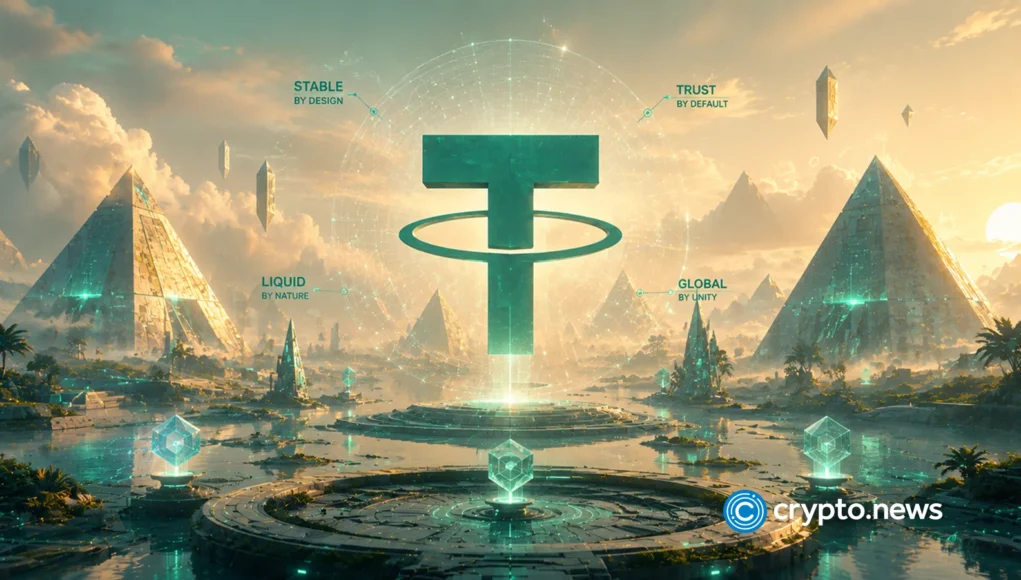

Tether has expanded its push into the US financial system by leading a $7 million funding round for Pact Labs to bring its USAT stablecoin into a payroll market that processes more than $11 trillion in annual payments.
Summary
- Tether has led a $7 million Series A round in Pact Labs to expand USAT into US payroll systems.
- The partnership targets the $11 trillion US payroll market with blockchain-based, real-time wage payments.
- The expansion comes as Tether grows outside Europe while US lawmakers continue debating stablecoin regulation.
According to a press release from Tether, the company led Pact Labs’ $7 million Series A funding round alongside Blockchange Ventures and Lasagna. The investment is intended to strengthen Pact Labs’ payroll and payment infrastructure while supporting enterprise adoption of USAT, Tether’s US-focused dollar-backed stablecoin.
Instead of concentrating on crypto trading activity, the partnership centers on integrating stablecoins into everyday wage payments used by businesses across the United States.
Payroll integration brings USAT into enterprise payments
Through the partnership, Pact Labs plans to embed USAT into payroll platforms used by employers, allowing companies to process wages using blockchain-based payment rails rather than conventional banking infrastructure. The company also intends to expand embedded digital wallets and other financial services that operate through blockchain networks.
Tether believes payroll is one of the strongest practical applications for stablecoins because wage payments occur on a predictable schedule and involve large transaction volumes.
According to Tether CEO Paolo Ardoino, the company’s transaction data has consistently indicated demand for dollar-backed digital assets as a settlement tool for salary payments. While Ardoino pointed to internal payment activity as evidence of that demand, he did not present it as an industry-wide conclusion.
The opportunity is significant because the US payroll system handles more than $11 trillion each year. Despite that scale, much of the infrastructure continues to rely on legacy banking systems and batch settlement cycles.
According to Tether, those processes can delay employee payments by several days, increasing the risk of overdraft fees, short-term borrowing, and other financial pressures for workers waiting to access earned wages.
Using blockchain infrastructure, employers could process payroll continuously instead of being limited by traditional banking hours. Tether says USAT is designed to support around-the-clock settlement, potentially reducing payment delays associated with existing payroll systems.
Global expansion continues as US regulation evolves
The payroll initiative arrives as Tether continues expanding its international footprint. According to recent reports, Bolivia is evaluating the use of Tether’s USDT alongside the US dollar and the boliviano within parts of its national payments framework, adding another potential use case for the company’s stablecoin infrastructure.
The US expansion also follows Tether’s withdrawal from parts of the European market after the implementation of the Markets in Crypto-Assets (MiCA) framework, which introduced new compliance requirements for stablecoin issuers operating within the European Union. As a result, the company has increasingly concentrated on jurisdictions where it sees stronger opportunities for adoption.
Meanwhile, stablecoin regulation has remained a central topic in Washington as lawmakers continue debating the CLARITY Act. Banking industry groups recently warned that the proposed legislation could leave regulatory gaps for stablecoin issuers, adding fresh uncertainty to the policy debate. Those concerns also coincided with weakness in shares of Circle, whose stock declined as investors reacted to questions surrounding the bill.
Against that backdrop, Tether’s latest investment places attention on practical payment infrastructure rather than digital asset trading. By backing payroll technology that serves mainstream businesses, the company is positioning USAT for use in one of the largest recurring payment markets in the United States while policymakers continue shaping the country’s stablecoin regulatory framework.