
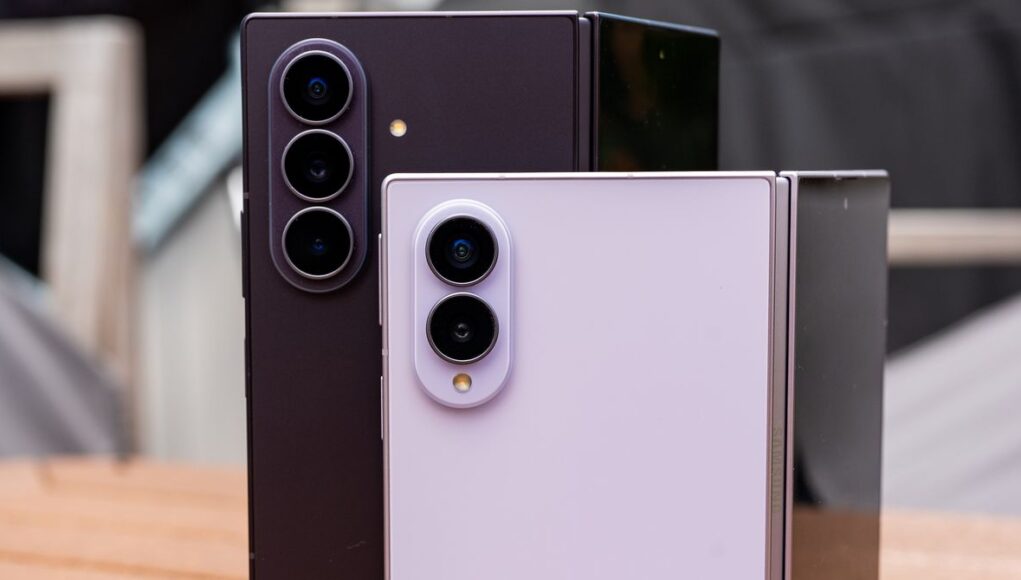
On both phones, the crease—the point in the display where it folds—looks significantly less obvious and feels better than on prior models, with less of a bump as your fingers swipe across the screen. That’s great, but my biggest design complaint with these Folds is the camera jutting out on the back. It means that whenever you set the phone on any surface, it rocks so much that it’s annoying. A case doesn’t really fix this either. Google’s figured this out with a horizontal camera bar for its Pixels (and so has Apple, apparently).
The Fold8 is immensely nicer to use in every way. I even prefer the way it handles split-screen mode more than the Ultra because things don’t feel super squished on the wide screen. There’s just more breathing room. And it’s nice to have the option to put three apps side by side.
Ultra Power
There’s a $200 difference between these two very expensive folding phones, a difference that doesn’t sting as much when you’re dropping two grand. But if you opt for the cheaper Fold8, you will be making some sacrifices from a pure spec-to-spec comparison. Thankfully, there is no sacrifice in performance; the Qualcomm Snapdragon 8 Elite Gen 5 chip is the same on both and delivers a buttery-smooth experience in every app and game.
Battery life is stronger on the Ultra, which makes sense considering its larger 5,000-mAh cell, compared to the Fold8’s 4,800-mAh capacity (marking Samsung’s first devices with silicon-carbon battery technology). But I’ve still been satisfied with both. I’ve been able to hit more than six hours of screen-on time with the Fold8 Ultra, and five to six on the Fold8, though I’m using the larger display far less on the Ultra, so it’s a bit of an unfair comparison. If you prefer the Ultra’s shape and use that inner display more, it’ll suck up more juice than mine did in my testing.
It’s really the camera system where you’re losing out. The Fold8 has a 50-megapixel primary sensor and a 50-megapixel ultrawide, with two 10-megapixel selfie cameras on the outer and inner screens, respectively. The Fold8 Ultra’s 200-megapixel main sensor is stronger overall in a variety of lighting conditions, but it’s the fact that you have access to the 10-megapixel 3X optical zoom that gives it a leg up. I wish Samsung offered a greater zoom option like the 5X optical on the Pixel 11 Pro Fold, and as a big zoom photographer, the lack of this on the Fold8—especially given its high price—is frustrating. Hopefully Samsung can remedy that in the Fold9.