



Key Takeaways
- Sen. Mike Rounds said negotiations “do not look good right now” ahead of the Sept. 15 cloture vote.
- Polymarket puts a passage this year near 15%.
- A 60-vote cloture threshold at 2:15 p.m. ET decides whether the bill reaches the Senate floor.
The Sentence That Moved the Odds
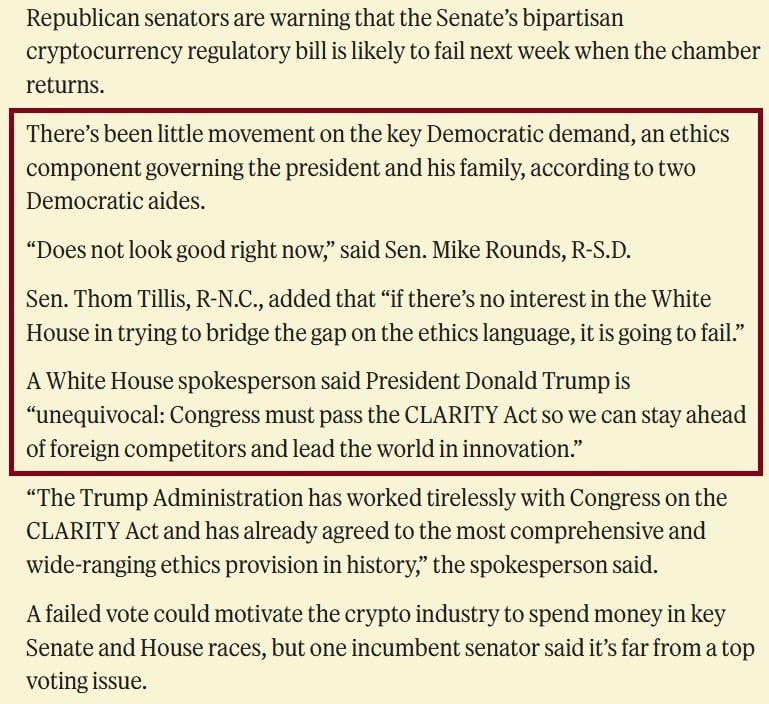
For most of 2026, the CLARITY Act’s problem was scheduling, but now it is the numbers. Sen. Thom Tillis, R-N.C., told Semafor the bill has no path unless the administration engages on the one provision Democrats will not drop, adding:
If there’s no interest in the White House in trying to bridge the gap on the ethics language, it is going to fail.
Sen. Mike Rounds, R-S.D., was shorter and blunter, describing the state of talks as one that “does not look good right now.” Two Republicans publicly writing off their own party’s signature digital asset bill, six days before a scheduled vote, is quite a telling sign.

Democrats want language barring a sitting president and immediate family members from profiting from digital asset businesses while the federal rules governing those businesses are still being written.
The White House says its current offer already amounts to the most comprehensive and wide-ranging ethics provision in history. Democrats counter that the drafted language does not sufficiently cover businesses controlled by a president’s relatives, given the Trump family’s exposure to token ventures and a bitcoin treasury vehicle.
That gap has survived every attempt to close it. Sen. Bernie Moreno signaled an end to talks before the August recess. Majority Leader John Thune pushed the vote into September rather than lose it outright in August.
Sept. 15 Is a Crowded Day
The cloture vote is set for 2:15 p.m. ET on Sept. 15. Supporters need 60 votes on the motion to proceed, which is not passage but permission to debate.
It is also the day the Federal Open Market Committee (FOMC) opens a two-day meeting. Bitcoin’s price has spent the week pinned near $79,000 and unable to clear $80,000, with fed funds futures assigning roughly 57% odds to a rate hike, up from 34.8% in late August. Anyone reading the same calendar gets a monetary decision and a regulatory verdict inside 48 hours, with August inflation data landing on Sept. 11 in between.
Prediction markets have already picked a side on one of them. Polymarket odds on the bill becoming law in 2026 sit near 15%, down from above 75% earlier in the year. Bitcoin.com News reported last week that those odds had stayed buried even as the Senate showdown closed in.
What Happens If Cloture Fails
A failed vote on Sept. 15 does not formally kill the bill, but it closes the last comfortable window. The House passed its version 294-134 in July 2025, and the Senate Banking Committee advanced a companion measure 15-9 in May 2026, with all Republicans and two Democrats in favor. A merged text arrived in July and has not moved since.
Industry groups are treating the pessimism as leverage rather than a forecast, arguing that lawmakers routinely talk down a bill’s chances to extract late concessions. In any case, if the cloture fails, the practical question becomes whether any market-structure bill reaches the floor before the midterm calendar swallows the remaining days. Interesting weeks ahead!


